12/08/2024 admin

Foreign Experts Favor Vietnam Labor Market: Survey

VietNamNet Bridge – Vietnam is one of the most attractive destinations for foreign workers because of the high post-tax income and low expenses for accommodations and meals. 

Vietnam was the 16th most attractive labor market among 34 surveyed markets in the HSBC’s Expat Explorer survey. Vietnam placed above Japan (18), Malaysia (19), France (23), Ireland (25), the US (30), Italy (31), and the UK (33). In terms of income, foreign experts working in Vietnam get higher benefits than in India, Thailand, Australia, the UK and US, ranking eighth among 34 countries.However, foreign experts have problems in educating their children in Vietnam. The country ranks 24th out of 34 countries in this area. After working hours, expats like traveling, challenging themselves and relaxing with entertainment activities. Nearly eight in every 10 foreign specialists working in Vietnam say they take more trips in Vietnam than in their home countries. They said the low costs in Vietnam helped them use their incomes more effectively. Fifty-two percent of foreign specialists working in Vietnam said they had better incomes here than in their home countries, lower than the average 53 percent globally.  However, as specialists in Vietnam bear lower income tax, three-fourths of them said their post-tax incomes had increased in Vietnam. The proportion is higher than the global average of 53 percent. Foreign specialists also said the working environment can bring them new experiences. Most of them said they travel more when they are in Vietnam, mostly because of the lower travelling expenses. Expats said they could sample local food and travel in Vietnam at “reasonable costs”. In general, Asia has emerged as an attractive destination for foreign specialists who want to challenge themselves. Two-thirds of the expats in Japan, and more than half in Taiwan and Vietnam said the aspiration to conquer challenges was the most important reasons behind their moves. The expats surveyed are mostly university graduates from western countries such as the US and the UK.Forty-two percent of expats in Japan and 35 percent of expats in Taiwan are from the US. Meanwhile, about one-fourth of expats in Malaysia and Vietnam are from the UK. A Vietnamese labor expert commented that the HSBC survey reflects the current flow of the workforce across the globe. He said Vietnam, with improved working and living conditions, has attracted many foreigners who work in many different fields, from engineers to physicians to singers and footballers.

Source by Vietnamnet.vn dated 27 Oct 2014

12/08/2024 admin

4 MAJOR DIFFERENCES BETWEEN MALE AND FEMALE JOB CANDIDATES 

Source: Christian Schappel, HR Morning
MedReps.com

Even if a job is “gender neutral,” how you approach the hiring process will determine whether more men or women apply for the position. To ensure a more equal split of applicants, you’ll want to mind these latest findings.

MedReps.com, a medical and pharmaceutical sales job board, recently set out to find the subtle differences in how men and women go about job hunting.

Knowing these differences can help employers tweak their job ads and hiring strategies to make sure they aren’t accidentally excluding a higher percentage of candidates from a particular gender.

After poring over research from all over the Web, MedReps.com found four interesting differences between how men and women approach a job hunt:

• Some women are turned off by job descriptions that list personality traits typically associated with men — such as “assertive,” “aggressive,” “analytical” and “independent.” Instead, they look for words like “conscientious,” “dedicated,” “responsible” and “sociable.” Men, on the other hand, aren’t affected by masculine or feminine descriptors.

• Far more men use social media in their job searches than women.

• Women who describe themselves in interviews using feminine terms (i.e., “warm,” “supportive,” “nurturing,” etc.) are viewed as less qualified for jobs in traditionally male dominated fields. Hiring managers in those fields are looking for more masculine descriptors (i.e., “achievement-oriented,” “assertive,” “independent,” etc.).

• Men tend to enter interviews with more confidence, striving to make a good first impression right away. Women, on the other hand, tend to begin interviews shaking off nerves and attempting to show off their positive personalities.

Tips for employers

Based on these findings, MedReps.com offered this advice to employers to help level the playing field in their hiring processes:

• Try to include a balance of masculine and feminine words in job descriptions and want ads to attract a balance of candidates.

• Look for candidates using a variety of sources. A heavy reliance on social media tends to attract more men.

• Evaluate candidates’ hard and soft skills, checking off boxes as candidates meet the criteria you’re looking for.

To dive deeper into what MedReps.com uncovered, check out the info graphic below:


12/08/2024 admin
  • HERE’S WHAT THE RESUME OF TOMORROW LOOKS LIKE

Source: HR Morning, by Christina Schappel; Davitt Corporate Partners

Paper, once the only medium for a resume, is going the way of the dinosaur. What’s stepping up to take its place? A hint: It’s more than just LinkedIn and other career websites.

Piles of the latest studies on resume creation, distribution and HR consumption were analyzed by the business coaching and occupational psychology firm Davitt Corporate Partners, and what it found may surprise you.

Davitt complied its most interesting findings into an infographic (shown below).

Some of the highlights:

  • YouTube is now a hotbed of resume activity.Move over social media sites, and make room for YouTube. Search “video resume” on YouTube, and you’ll get hundreds of thousands of hits. And, according to a Vault Inc. survey, 89% of employers said they’d watch a video resume — mostly because it helps them assess a candidate’s presentation skills and demean
  • Social media is the new paper.According to Davitt, 93% of employers use social media for recruiting purposes. LinkedIn is still the most popular social media destination, but employers say it’s also important to maintain a professional profile on both Facebook and Twitter.or. Plus, more career sites, like CareerBuilder, are giving users the option to post a video resume.
  • Candidates are being tossed aside due to their emails.The same Vault survey revealed that 76% of resumes are ignored because of an unprofessional email address attached to them. So PartyBoy1996@aol.com, it’s time to get a more down-to-earth address. Or, to look at it another way, there’s a whole slew of out-of-touch, but perhaps immensely talented, job seekers still in the open market who may just need a few email etiquette lessons.
  • Resumes are becoming more Twitter-like.After reading bite-size tweets all day, nobody wants to wade through a bunch of text. As a result, resumes are becoming more condensed.
  • Charts and graphs are the new eye-catchers.Forget about thick, fancy paper stock as a way to make resumes stand out. According to Davitt, charts, graphs and even infographics are becoming more commonplace, and have even become a way for job candidates to set themselves apart from the competition.

For more of Davitt’s findings, see the infographic below.

Source: Davitt Corporate Partners

12/08/2024 admin

Whether true leaders are born, made, or something in between, they are out there, but they may not be easy to find. From identifying potential candidates to conducting interviews and negotiating team politics, hiring a new CEO for your company is a huge task, but it’s also one of the most important decisions your company can make.

A search committee often has a perfect person in mind before they begin their search, but that perfect fit commonly varies between each member. In addition to the expectations of the new CEO’s qualities, committees often want to pay less than market value for the position.

At DHR International, we work with our clients to ensure everyone on the search committee is on the same page with what skills and traits a candidate needs to embody in order to be a successful CEO. But as we know, finding someone with every desired quality is impossible. For that reason, we tell our clients about the 85 percent solution: If you’ve found 85 percent of the qualities you’re looking for, you have your hands on the proper new CEO.

With that in mind, here is your guide to finding the right person to lead your company:

Create a search committee. Assemble a group of board directors and senior executives to manage the process of recruiting. Each member should have the trust of other board and operational leaders. The committee should be small enough to easily communicate, yet large enough that some diversity of opinion is possible. Designate specific areas of focus for each search committee member where each member’s individual expertise and insight will truly shine.

Set your expectations. Finding the perfect CEO is a shot in the dark unless you know who you’re looking for. Identify what you want your candidate pool to look like, and list clear, achievable goals you want your next CEO to accomplish. What should your new CEO achieve in his or her first six months? How about in the first year? What should your new CEO bring to the company in terms of return on shareholder value or diversification? Also, be sure to decide on a timeline for your search before you begin.

Revisit your succession plan. Look at the succession plan that’s already established by the board, and examine all internal opportunities. Could the president or the COO move up? Any potential internal candidates should be referred to the search firm or committee, and they should be measured up against the external candidate pool without bias.

Carefully bring candidates into the fold. At the CEO level, group interviews are often frowned upon by candidates. A one-on-one introduction to the company is often your best foot forward when making a first impression. When the time is right, feel free to get creative with how you introduce your chosen candidate to the remainder of the search committee. Think about hosting a lunch or drinks to show your candidate the level of interest and respect you have for him or her. Remember that the candidate’s decision is just as critical as yours — furnish each of your “finalists” with all of the necessary exposure they need to be able to make an informed decision.

Use discretion. Confidentiality is one of the most important things to remember when you’re recruiting a CEO. Before listing your open position, draft up a job description that’s informative enough to be of value, yet not so specific as to name your company. Then, have your committee decide upon the right time to reveal the name of your business to the candidates. Also, be sure to have an emergency action plan prepared in the event the process is compromised. Have a ready stable of interim CEOs identified internally, and be ready to discuss the impact of the breach with analysts and shareholders.

Keeping your process clean and confidential should allow you to find the most amazing candidates for your company, but if you still need help choosing, here are the three most important characteristics you should be looking for:

  1. Leadership: Leadership is obviously vital, but identifying a great leader is more art than science. A track record of relevant, successful experiences will show you a lot about what a candidate is capable of. Any good leader will also be able to interact with other leaders in the company, including the chairperson of the board. Test out this interaction in the recruiting process to see what life would be like with that candidate at the helm.
  2. Communication: A great CEO candidate is able to communicate clearly to all audiences. That means he or she can confidently talk about high-level market trends and strategies with analysts, and he or she can also break down these concepts into simpler terms for public consumption. You might find the smartest candidate in the world, but if he can’t express his ideas to a wide range of people — employees, officers of the company, board members, and shareholders — he’s going to have a very short-lived tenure.
  3. Approachability: Being down-to-earth is an important — yet often overlooked — quality for a CEO. A good leader must be approachable and willing to listen to others rather than just following his or her own instincts. It’s also important to find someone who is humble and aware enough to understand that there’s got to be a succession plan. No CEO wants to think about his or her departure before even being appointed, but the ability to develop a viable and executable plan for the future is key.

Selecting a new CEO is a singularly important endeavor that should be taken with care and dispatch. Anything less will diminish you and your company’s chances for success. If you get your search methodology right, however, you’ll surely assemble a pool of high-quality candidates.

Contributor: Pete Metzger/

Posted: 03/13/2016

http://www.humanresourcesiq.com

12/08/2024 admin

We have discussed the basic concept of HRM and the ways in which it helps the organization meet its goals. In this article, we discuss the reasons for organizations to have a HRM strategy as well as the business drivers that make the strategy imperative for organizational success.

It is a fact that to thrive in the chaotic and turbulent business environment, firms need to constantly innovate and be “ahead of the curve” in terms of business practices and strategies. It is from this motivation to be at the top of the pack that HRM becomes a valuable tool for management to ensure success.

The Evolving Business Paradigm

One of the factors behind organizations giving a lot of attention to their people is the nature of the firms in the current business environment. Given the fact that there has been a steady movement towards an economy based on services, it becomes important for firms engaged in the service sector to keep their employees motivated and productive. Even in the manufacturing and the traditional sectors, the need to remain competitive has meant that firms in these sectors deploy strategies that make effective use of their resources. This changed business landscape has come about as a result of a paradigm shift in the way businesses and firms view their employees as more than just resources and instead adopt a “people first” approach.

Strategic Management and HRM

As discussed in the articles on modern day HRM practices, there is a need to align organizational goals with that of the HR strategy to ensure that there is alignment of the people policies with that of the management objectives. This means that the HR department can no longer be viewed as an appendage of the firm but instead is a vital organ in ensuring organizational success.

The aims of strategic management are to provide the organization with a sense of direction and a feeling of purpose. The days when the HR manager was concerned with administrative duties is over and the current HRM practices in many industries are taken as seriously as say, the marketing and production functions.

Importance of HRM for Organizational Success

The practice of HRM must be viewed through the prism of overall strategic goals for the organization instead of a standalone tint that takes a unit based or a micro approach. The idea here is to adopt a holistic perspective towards HRM that ensures that there are no piecemeal strategies and the HRM policy enmeshes itself fully with those of the organizational goals. For instance, if the training needs of the employees are simply met with perfunctory trainings on omnibus topics, the firm stands to lose not only from the time that the employees spend in training but also a loss of direction. Hence, the organization that takes its HRM policies seriously will ensure that training is based on focused and topical methods.

In conclusion, the practice of HRM needs to be integrated with the overall strategy to ensure effective use of people and provide better returns to the organizations in terms of ROI (Return on Investment) for every rupee or dollar spent on them. Unless the HRM practice is designed in this way, the firms stand to lose from not utilizing people fully. And this does not bode well for the success of the organization.

https://www.managementstudyguide.com


12/08/2024 admin
 

People Enabling and People Empowerment

Until now, we have discussed the role of an HR manager in various processes related to the HR function. The emphasis was on a general overview and a description of the various activities instead of specific details.

This article discusses a couple of the crucial functions that an HR manager has to perform and those are related to enabling employees to perform to their potential and empowering the employees to lead fulfilling careers. In the earlier decades, organizational theory and practice limited itself to ensuring that employees are well paid and their benefits and other perks taken care of. There was little by way of ensuring personal fulfillment and job satisfaction. This was because of the predominance of manufacturing in the economies of the 1970s and the 1980s which meant that the workforce was to be treated as cogs in the machine instead of assets that the modern day HRM theory and practice follows.

With the advent of the services sector, a branch of HRM known as SHRM or Strategic Human Resource Management grew in response to the changing profiles of employees and this approach when combined with the systems approach of management thought meant that the enabling of employees and the empowerment of employees were the buzzwords for HR managers.

Specific Aspects of the Twin Objectives

Concomitant with this trend, the HR managers in most firms these days focus on these aspects by constantly seeking feedback, suggesting improvements, and providing people support to the employees. in multinational companies, it is usually the case that the employees above the team leader level have one-on-ones with the HR staff where all the issues concerning them are discussed threadbare. These meetings also provide the employees with an opportunity to articulate concerns and point to any grievances that they might have with regards to their jobs, work, or the organization in general.

The team members are usually assigned a people manager who performs these tasks and ensures that the employees are performing to their potential. Moreover, the HR function in conjunction with the line managers conduct periodic trainings in soft skills like communication, personal relations, and leadership. Indeed, many organizations like Fidelity have established a set protocol for employees to attend leadership development trainings that bring out the leaders in them and groom them as future managers and future CEO’s. Hence, the twin objectives of people empowerment and people enabling are thus met in this paradigm.

How this works in the Real World

Of course, this does not mean that the whole situation resembles utopia where employees and the managers along with the HR staff are one big happy family. On the contrary, in most real world settings, the HR managers have a tough time convincing the employees that the organization means well for them and that they ought to look on the bright side of things instead of complaining and being bitter about issues and grievances all the time. This is where the HR managers skills and personality come into the picture as the ability to persuade, enlighten, and if necessary wield the stick play a crucial role in people management. In other words, the HR manager has to tread a fine line between giving in to the employees and following the organizational mandate. This means that a variety of strategies are usually employed by the HR managers that include some of the skills listed above in addition to the personal equations that the HR manager has with the employees.

https://www.managementstudyguide.com/


12/08/2024 admin

Hiring managers often kick off interviews with a deceptively simple question: “Tell me about yourself.”

Interviewees may be tempted to gloss over this question in their preparation — after all, everyone thinks they know the answer by heart. But according to bestselling management author and CNBC contributor Suzy Welch, you should have your answer meticulously prepared.

Potential employers will use your response to determine two things: your maturity and your authenticity, Welch tells CNBC Make It.

CNBC Contributor Suzy Welch.

CNBC Contributor Suzy Welch.

Here’s the best way to answer this common question.

Tell your story with the job in mind

While it may sound like the hiring manager has asked for your life story, they don’t want to hear a long-winded, aimless tale. And they already have the bulk of your professional narrative in front of them, in the form of your resume.

“The interviewer, usually your future boss, wants to know the parts of your life story that relate to your doing well in the open job,” Welch says.

For example, if you are interviewing for a job in sales, tell the hiring manager how you ran lemonade stands when you were a kid, sold products in college or pitched a new project at your last job.

Ask yourself, “What is it about me that he or she cares about?” Welch says.

This shows the hiring manager that you are aware of what they’re looking for, which is a sign of maturity.

607477409

Getty Images

Don’t be afraid to show who you really are

While you may think it’s best to stick to a script, you should also add a bit of personality to your answers.

“Your interviewer is hoping to hear who you really are,” Welch says. “They want to see if you’ll fit in, culturally.”

For example, Welch says that if she was interviewing for a job as a journalist, she would start her answer by saying, “I was born in Portland, Oregon, and I come from a big, crazy and generally happy Italian family. But for the purposes of this job, I began my life as a writer at my high school newspaper.”

One or two small details that show you are self-aware, empathetic or any other positive trait you’re hoping to demonstrate can go a long way.

“YOUR INTERVIEWER IS HOPING TO HEAR WHO YOU REALLY ARE.”-Suzy Welch, bestselling management author and CNBC contributor

“Use this opportunity to actually say something like, ‘The one thing that doesn’t show up on my resume is my values,'” Welch suggests.

Jot down notes on what you’d like to convey about yourself in your answer. Or better yet, practice your response for a friend or family member.

“Be prepared,” Welch says. “Know it’s coming at you, and don’t wing it. It’s an incredible opportunity to differentiate yourself.”

More from Suzy Welch:

27/05/2020 admin

EXECUTIVE SEARCH & SELECTION

Executive Search & Selection, Approach & Methodology

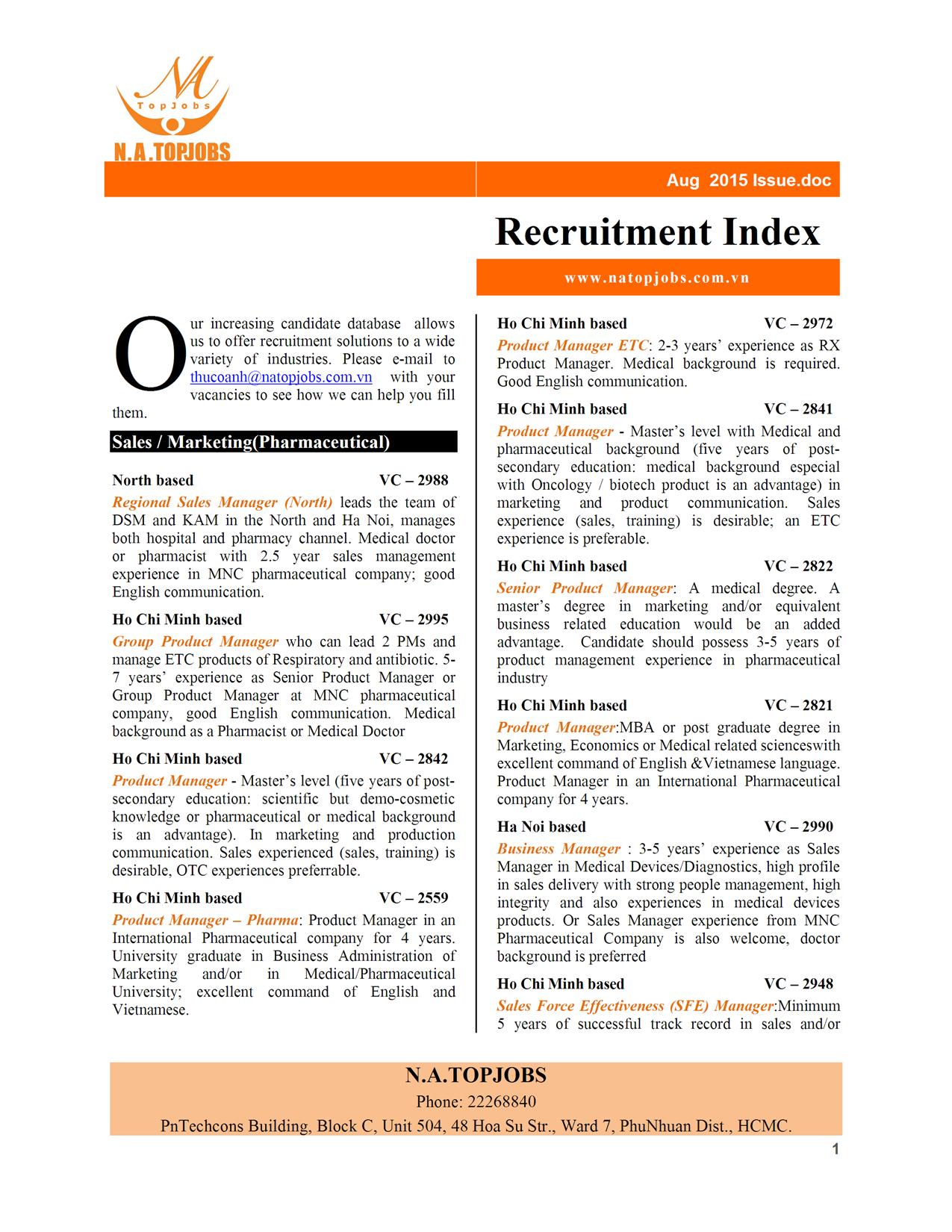
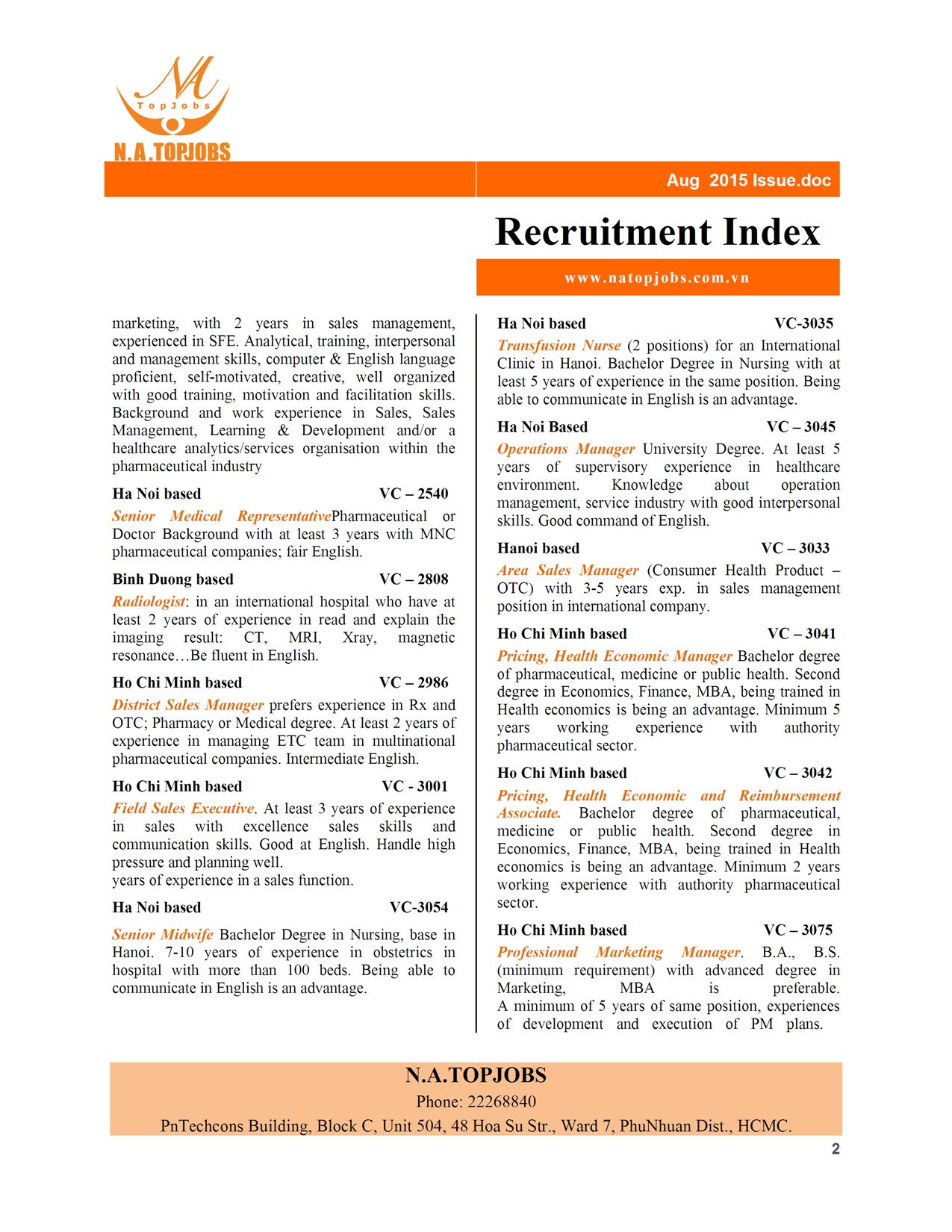
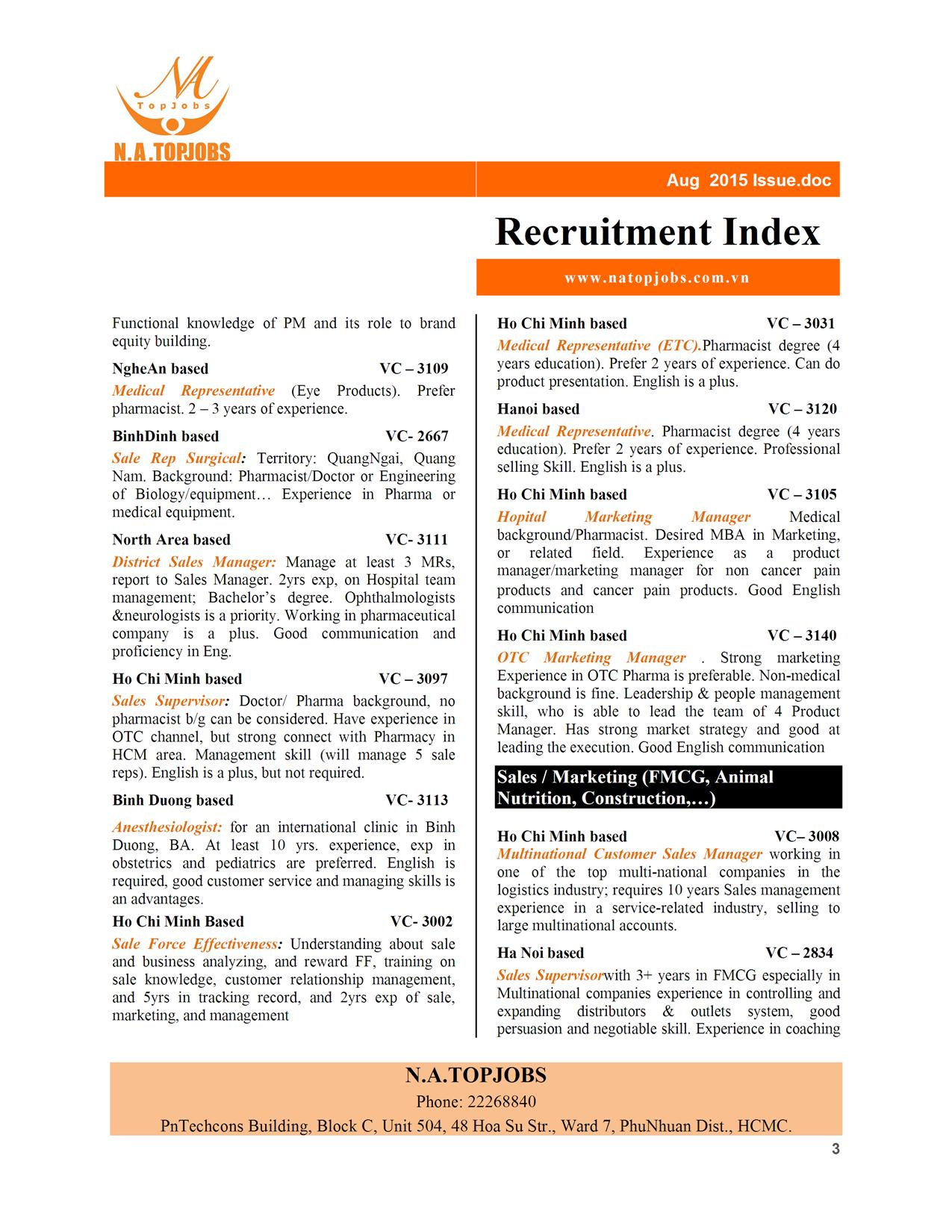
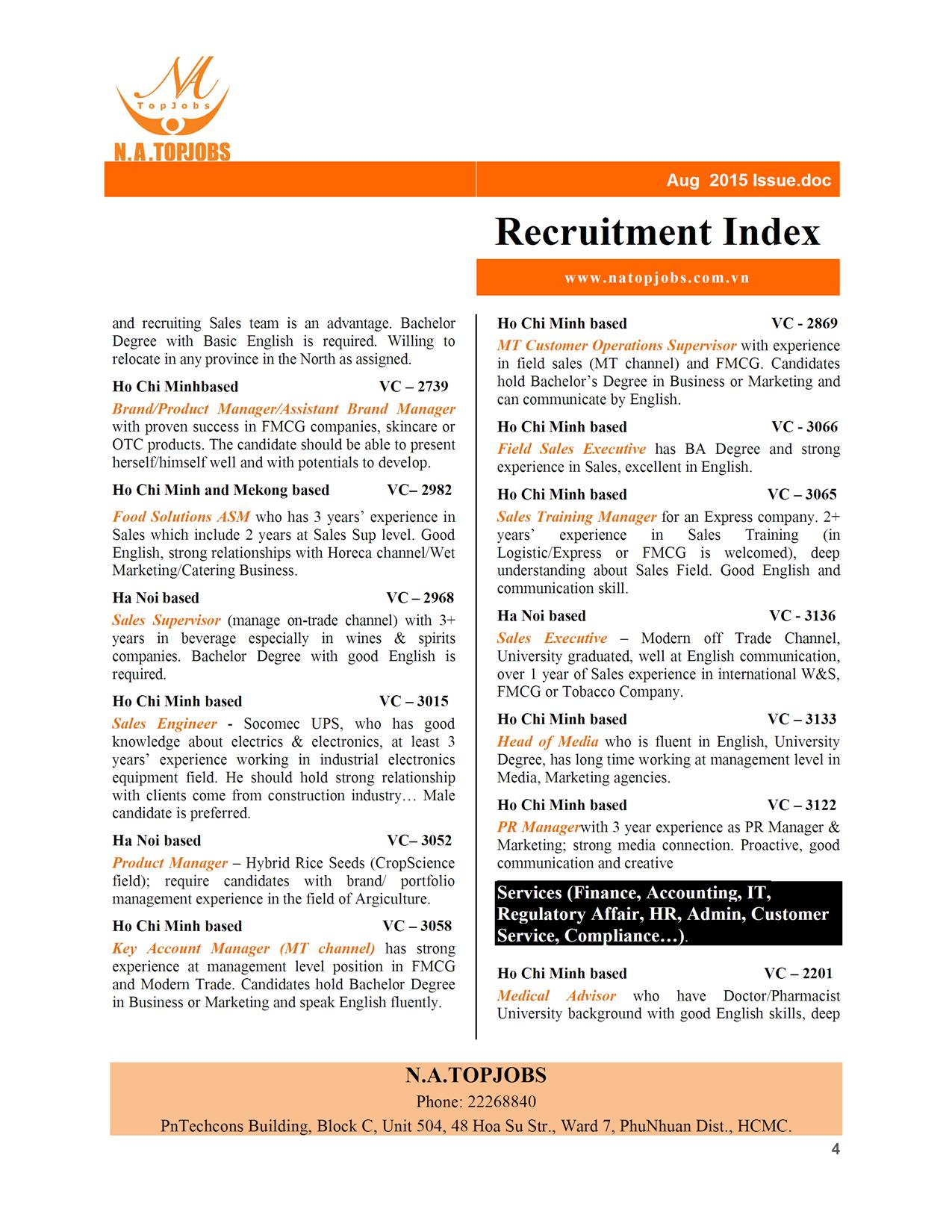
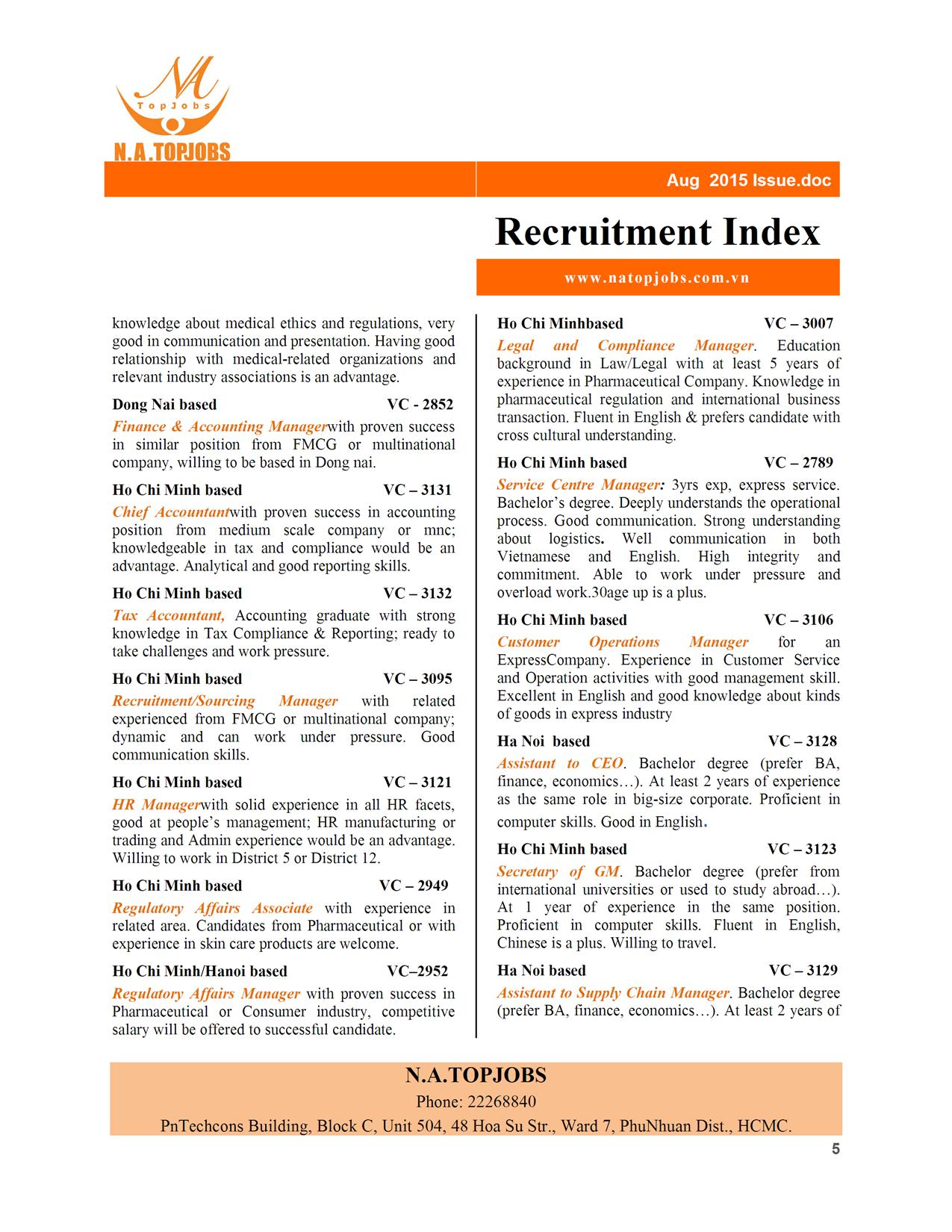
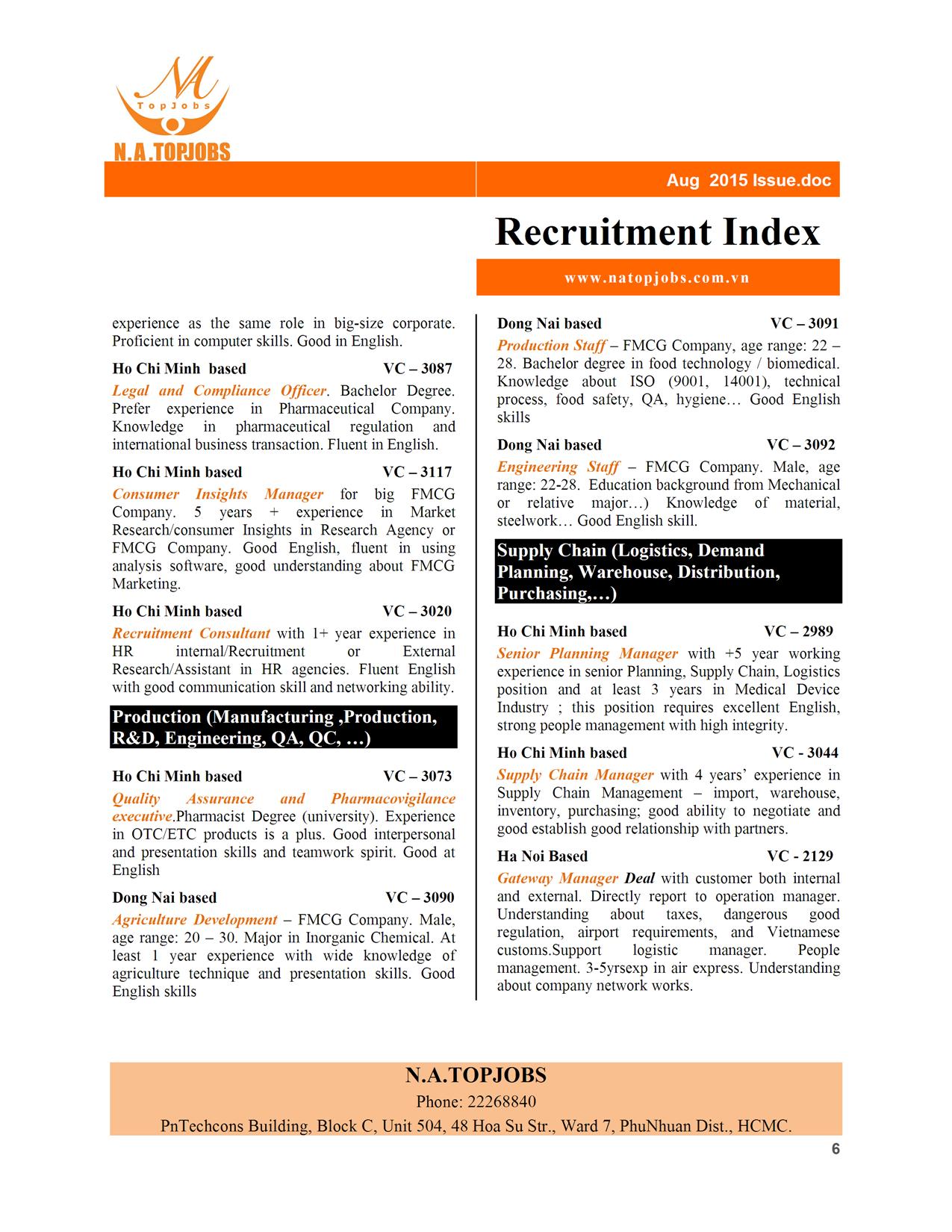
Our conscientious approach measures our success and commitment to our respected clients. We created a clear and practical methodology which emphasize our vision to provide a highly qualified service by understanding client’s business and it’s respective demands. N.A. Topjobs uses an appropriate mix of search methods and recruitment tools to identify the desirable candidates.

Our Expertise:

Healthcare, Pharmaceutical, Medical Device
Fast Moving Consumer Goods (FMCG)
Cosmetics
Supply Chain/Logistics/Forwarding
Agriculture & Animal Nutrition
Chemical
Manufacturing
IT
At N.A.TOPJOBS we consider our people to be the best in the industry. That means our candidates and clients alike can rely on expert advice and guidance on careers and recruitment needs

With our clients. We are honest offering clear advice, even if it sometimes means telling you what you may not want to hear

We are flexible enough to tailor our methodology to suit your needs, not ours
We are passionate about working with you, dedicating time to get to know the unique demands of your business and culture
With our candidates. We understand that changing jobs can be stressful. The support of a professional and experienced recruitment firm can help make the transition process a smooth one.

Your relationship with N.A.TOPJOBS doesn’t begin and end with successful job search. We aim to become integral to your career path and assist wherever appropriate in helping you achieve your career goals. Our dedicated consultants will offer you advise on:

Permanent or interim positions
The current job market
Market trends
Preparing your resume
Interview techniques
Salary levels
Company information
If you wish to know more on how our services can help you, please feel free to contact us at: Tel: 08 62926671 – 0862926672 or send email to recruitment@natopjobs.com.vn.

08/11/2018 admin

JOB PURPOSE: Effectively handle the position by finding the suitable candidates on behalf of client’s requirements, either temporary or permanent job position. Responsible for guiding the candidates through the application process, placing advertisements, giving interviews, matching candidates to the appropriate job and cooperating with the company in its business development.

MAJOR ACCOUNTABILITIES
+ Search and Selection:
– Developing a good understanding of client’s industry, the whole structure of organization, what they do and their work culture or environment.
– Headhunting: Identifying and approaching suitable candidates
– Completing a search of the candidate database to find the right person for the client’s vacancy.
– Receiving and reviewing applications, managing interviews and short-listing candidates
– Requesting references and checking the suitability of applicants before submitting their details to the client.
– Briefing the candidate about the responsibilities, salary and benefits of the job in question.
– Preparing CV’s and correspondence to forward to clients in respect of suitable candidates
– Organizing interviews for candidate as requested by the client
– Informing candidates about the results of their interviews
– Negotiating pay and salary rates and finalizing arrangements between clients and candidates
– Reviewing recruitment policies to ensure effectiveness of selection techniques and recruitment programs.
+ Business Development:
– Maintain and develop client and candidate’s database through cold calls and introduction of company service to potential clients.
– Knew much more about account management, how to maintain and keep good relationship with clients.
– Research prospective client details, finding out as much as possible about the company to ensure a professional approach

15/08/2017 admin

Responsibilities: 

  • Responsible for day to day finance and accounts operations
  • Handle full spectrum of financial and cost accounting role eg. AR, AP, GL, forecasting, budgeting etc
  • Perform full set of accounts and ensure timely closing of accounts.
  • Perform project cost forecasts/budgets, cost tracking, monitoring and controls.
  • Responsible for timely monthly consolidated financial statements, payments, cash-flow management reporting for
  • Review & approve payment vouchers & journal entries
  • Perform cash flow forecasting, budgeting and working closely with the operations and project teams in analyzing margins, variances and cost analysis.
  • Issue project cost reports for review and approval.
  • Develop and maintain internal control and effective accounting system and policies for the set up.
  • Support CFO in ensuring that intercompany cost allocations are in line with management agreements and transfer policy

Reguirements

  • Degree in Accounting/Finance/ACCA qualification
  • Min 3-5 years relevant experience in financial & management accounting particularly in FMCG/ F&B is preferred.
  • Excellent strategic planning skills and able to interact with all levels.
  • Good MS Office skills particularly strong capabilities in MS Excel.
  • Able to work independently and highly meticulous.
  • Working experience in SAP is highly regarded.

07/08/2017 admin

RESPONSIBILITIES:

– Maintain a high level of QMS Knowledge and awareness of changes within the commercial environment to seek opportunities and manage potential bussiness adversity

– Act as relevant LOC quality contact for the Regional Quality organization providing communication to regional quality organization on progess on QMS compliance updates on quality plans and escalation of issues.

– Supporting the LOC Quality Manager to ensure a robust, substainable and effective QMS through monitoring and reviewing the compliance status within the LOC element of the Supply Chain and Market Company

– Supporting the implementation and maintenance of effective Quality Assurance systems to ensure that local operations are full comliance with company standards and policies, Guide for Commercial Companies, GMP, GDP and regulatory requirements by supporting the LOC Quality Manager as directed

– Support the LOC Quality Manager to ensure that all internal procedures and systems in use in the LOC are compliant to QMS, Guide for Commercial companies and local regulatory requirements, including (but not limmited to)

– Maintains all quality documentation such as product specifications and Standard Operating Procedures in accordance with company policies

– Maintains and updates the QA Standard Operating Procedures

KNOWLEDGE/ EXPERIENCE/ SKILLS/ COMPETENCIES REQUIRED

Education and Experience:

– First Degree in scientific or engineering discipline, or able to demonstrate equivelent level of knowledge

– Quality experience within the industry, and application of Quallity Systems

–  Strong interpersonal and negotiation skills

– problem identification and solving skills

– able to work effectovely in English

– Knowledge of regulatory requirements pertaining to GMP/GDP

Essentail Skills and Abilities:

– Professional written and verbal communication skill

– Ability to deliver clear communication and foster exellent working relationships with peers and management

– Analytical mind, good attention to detail and problem solving skills within a structured process

– Concise in the description of the different QA situation.

– Ability to self-motivate and be resilient and focused under pressure

– Strong gereral computer literacy with Internet skills.